
Using environmental scanning to strengthen child safeguarding
Environmental scans help ECEC staff to be alert and effectively identify, prevent and manage risks that could lead to child harm and abuse.
30 July 2025
This article was updated on 22 May 2026.
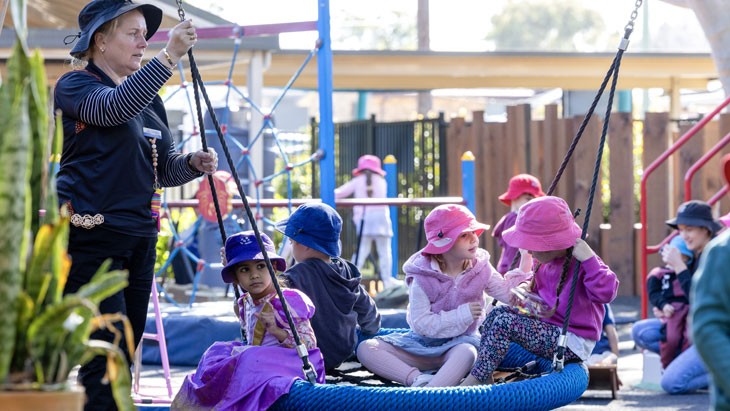
Child safety in early childhood education and care (ECEC) services is strengthened through consistent, proactive everyday practice and actions. From regular environmental scans to consistent active supervision and responsive practices, educators play the most immediate and important role in making sure every child is safe, every day.
Situational prevention – a strategic approach
Situational prevention focuses on creating and maintaining environments that reduce opportunities for harm through organisational policies, procedures and practice. The approach aims to:
- remove excuses that offenders could use to rationalise or justify their actions (excuses could include unclear or absent policies and procedures etc.)
- decrease the possibility for anyone to cause harm
- decrease the vulnerability of individuals
- foster a culture of reporting and shared accountability.
Using a situational prevention approach helps ECEC services identify and effectively respond to potential risks of harm and abuse specific to their context. It also supports services to remain alert and responsive to changing situations, environments and emerging risks.
The Dynamic Prevention Model
Professor Keith Kaufman’s (2017) dynamic prevention framework provides a practical approach for organisations to identify and address environmental and organisational factors that may increase the risk of child harm or abuse. The framework requires organisations to:
- identify vulnerabilities or past issues, recognising that staff, children and families may have different perspectives on risk
- develop targeted strategies to address identified concerns
- prioritise actions based on level of risk or likelihood of risk
- implement changes and monitor their effectiveness over time.
Environmental scans are one way an ECEC services can apply this approach in practice. Regular scanning helps educators remain aware of their surroundings, identify emerging concerns and respond proactively to changes within the environment. Through regular environment scans, ECEC services can:
- prevent harm before it happens
- identify risks or concerns that others might miss
- create environments where children feel safe, supported and confident
- ensure all staff understand what to look for and what to do.
What is an environmental scan?
Environmental scanning is an element of active supervision. It is a simple but effective tool that can help services build a strong safeguarding culture and meet its responsibilities under the National Quality Framework. This includes but is not limited to:
- Children (Education and Care Services) Law (NSW) – section 3A, section 165, section 167 and section 168
- Education and Care Services National Regulations – Part 4.2 and Part 4.3
- National Quality Standard – Quality Area 2 and 3
- NSW Child Safe Standards – Standards 1, 7, 8 and 9.
An environmental scan involves regularly observing both the indoor and outdoor areas of a service to identify anything that could pose a risk to a child. It also includes paying attention to how all staff are interacting with children. This is an ongoing responsibility that all team members should carry out consistently and with purpose throughout the day.
Scanning the environment regularly helps ECEC educators to:
- ensure the physical environment is safe and set up to support active supervision (for example, providing clear lines of sight)
- create and maintain spaces where children feel safe, confident and supported to participate
- respond to children’s needs and changes in the environment in a timely way
- identify risks early and prevent harm before it happens
- understand what to look for and what to do, if potential risks to children’s safety or wellbeing are identified.
Supervision is about being present, observant and being actively involved in children’s learning and play. It involves continuously scanning the environment, maintaining visibility of all children, and responding promptly to changes or risk while being engaged in learning and play with children.
When to conduct environmental scans
Conducting environmental scans is a key part of supervising and engaging with children in an ECEC setting. In addition to continuous scanning throughout the day, services can schedule designated times for staff to complete focused environmental scans, for example:
- before children arrive – to ensure the environment is safe and ready for the day
- during transitions – when moving between spaces, areas or activities
- after lunch or rest time – when routines shift or new groups form
- at the end of the day – to check for hazards, tidy the space and reset the environment.
Environmental scanning in practice
Below are some scenarios and examples of what to be aware of while scanning your environment. Use these as prompts to stay alert and be consistent when conducting scans across your service. Think about your service environment and add any other considerations specific to your context.
While scanning the environment, you should consider the following:
- Can I see all of the children in my area?
- Is there anything that could hurt/harm a child?
- Do I need to move or adjust anything to make this space safer?
- Are there enough educators present for this groupof children?
- Are children appropriately supervised based on the activity and risk level?
- Are any hazards present (e.g. spills, broken equipment, unsafe materials)?
- Are entry and exit points secure and monitored?
Scenario
In an early learning room, staff noticed that a tall shelf used for storing resources was creating a visual barrier. They replaced it with lower open shelving that still provided storage but allowed clear lines of sight across the room. This small change improved both supervision and children's ability to move freely and safely.
Things to consider
- Are gates, doors and exits locked, secured or monitored?
- Are there any blind spots or secluded areas where a child, staff member or educator could be out of sight?
- Is the outdoor play area clear of rubbish, sticks and broken toys?
- Is any furniture or furnishings, such as curtains or posters, blocking visibility or unsafe?
- Are toilets and change areas physically safe and consistently supervised?
- Do supervision plans and strategies support staff to see and be physically able to respond to all areas or spaces within the learning environment?
Scenario 1
During outdoor play, educators in a long day care centre noticed that the placement of a cubby house created a blind spot near the back fence where children occasionally gathered out of sight. They also noticed that children would occasionally close the door and windows when playing in the cubby, obstructing visibility.
The educators repositioned the cubby house to face the main play area and shifted it away from the fence line to allow for better visibility from multiple angles. They also removed the door and windows, and added a play mat nearby to encourage more collaborative and supervised play around the cubby.
Things to consider
- Are there enough staff to meet ratio requirements and support active supervision for the group size and space?
- Can staff always see all children, all areas and other staff members clearly?
- Are staff spread out well, especially during outdoor play or transitions? Can they promptly respond to any risks or hazards?
- Are quiet or secluded spaces and locations supervised, including equipment and imaginary play, tents, cubby houses, parachutes and bushes?
- Have children’s preferences and interests been incorporated into the environment and resource set up?
Scenario 2
In one preschool room, staff realised that a large collage display on a window near the quiet corner blocked their view from the main play area into the sleeping area. They moved the display to an interior wall of the preschool room, at children’s eye height, which improved supervision while still showcasing children’s work.
Things to consider
- Do staff physically check sleeping children?
- Are staff aware of and do they follow Red Nose sleep and rest best practice guidelines?
- Are furniture, shelving, or displays creating blind spots that reduce supervision?
- Is the sleep/rest area positioned so it can be easily and frequently observed?
- Are physical sleep checks being conducted at appropriate intervals and documented where required?
- Are windows/glass areas clear for visibility at all times? Remove posters, artwork and other items that obstruct visibility.
Scenario 1
A family day care educator noticed the dramatic play furniture setup in their approved learning space had been moved to form a U-shape that limited clear lines of sight across the room. They rearranged the furniture to allow clear scanning of the space, improving supervision and access.
Scenario 2
Staff noticed children had put several pieces of material over a table to make a cubby house, which limited their line of sight and visibility. To support safety and visibility, the team agreed to limit such play to open-frame structures with clear boundaries, which still enabled imaginative play.
Things to consider
- Are materials and spaces prepared before children arrive to support both safe supervision and play opportunities?
- Are all areas inclusive and accessible to all children, including those with disabilities or additional needs?
- How can children’s play, including imaginative play like cubbies and dens, be supported while still maintaining clear lines of sight?
- Can open-ended structures or open entryways be used to allow cubby-style play while still supporting supervision?
- is the overall layout easy for educators to supervise without limiting children’s play experiences?
- Are staff adequately supervised and visible to others when working in one-on-one areas such as nappy change, sleep and rest and toileting areas?
Scenario
A cleaner’s cupboard was occasionally left ajar because staff were regularly accessing supplies. To make this safer, the team installed a self-closing latch with a magnetic catch to ensure the door closed securely each time.
They also organised specific times during the day where staff could access the cupboard and added a reminder sign to keep the door shut immediately after use. This reduced the likelihood of accidental access by children while continuing staff accessibility.
Things to consider
- Are staff-only spaces (e.g. kitchens, staff rooms, storage rooms) locked or clearly designated as ‘out of bounds’ for children?
- Are systems in place to ensure these areas are accessed safely, such as scheduled access times or clear procedures for staff use?
- Do service policies support safe cleaning practices, including appropriate storage, handling, and supervision of chemicals and hazardous substances?
- Are all chemicals stored in locked cupboards with clear labelling?
- Are staff toilets and staff rooms designed and managed so they are accessible to staff only and not accessible to children?
Scenario
An educator noticed that the dim lighting in the cot room made it difficult to clearly see each child while they were resting. Although the low light supported a calm sleep environment, it also limited visibility.
After discussing the concerns with their team, they installed adjustable lighting that allowed staff to maintain a restful atmosphere for children while ensuring all children were clearly visible.
Things to consider
- Is there sufficient lighting to ensure clear visibility of all children in both indoor and outdoor environments, including sleep and rest areas?
- Does the lighting balance a calm, restful environment with the need for effective supervision?
- Are sleep and rest areas set up so educators can clearly see each child at all times, in line with safe sleep practices?
- Is the temperature maintained at a comfortable level for children and staff?
- Are floors, walkways, and surfaces free from hazards such as spills, clutter, or tripping risks?
- Are environmental conditions regularly reviewed to ensure they continue to support both safety and effective supervision?
Scenario
A service added visual markers on the ground to guide parents to safe walkways during busy drop-off times, improving traffic flow and reducing risk in the carpark.
Things to consider
- Are the ground markers clearly visible in all weather and lighting conditions (e.g. morning glare, rain, low light)?
- Do the markers create a clear, intuitive walking path that separates pedestrians from vehicle movement?
- Is there adequate supervision or staff presence during peak drop-off and pick-up times to support communication and guide families?
Teamwork is key
Environmental scanning is most powerful when everyone is on the same page. Share and reflect regularly on your observations as a team.
For example:
- talk about environmental scans and identified risks during team meetings or handovers, including risks or concerns that may happen or incidents that have happened
- point out potential risks when you notice them
- share what works and what doesn’t
- draw on your team’s knowledge of the children – what do certain children need to stay safe today?
Draw on any learnings to continuously improve your service’s child safe policies, practices and the environment.
Managing risks
Environmental scanning is a key part of ongoing risk assessment and management in ECEC settings. It supports educators and ECEC staff to identify hazards early, assess the level of risk, and implement appropriate control measures to keep children safe.
Every time you adjust furniture, check equipment, or notice something out of place, you are actively safeguarding children by identifying and managing risk in the environment.
If a risk or hazard is identified:
- Assess the risk – consider how likely it is to cause harm and how serious that harm could be.
- Control the risk immediately if possible – remove, fix, or isolate the hazard (e.g. close gate, remove item, restrict access).
- Escalate if required – report to the team leader or nominated supervisor if it cannot be resolved immediately.
- Document the issue – record hazards, incidents, or maintenance needs according to service procedures.
- Follow up – ensure the issue has been addressed and the control measures are effective.
- Review practices – update supervision plans or risk assessments if the environment or situation has changed.
Key principles for practice:
- Scan the environment before and during activities to prevent risks rather than react to them.
- Recognise that familiar spaces can still present new or hidden hazards.
- Communicate concerns clearly with your team and escalate when unsure.
- Follow service policies and procedures for hazard reporting and risk management.
- Prioritise safety while maintaining a supportive and engaging environment for children.
Always speak up. If something feels off, trust your instincts and raise it. You are the eyes and ears on the ground.
ACECQA
- Child safety page, includes information on upcoming changes to the National Quality Framework relating to child safety
- NQF Child Safety Guides, includes self-assessment and risk assessment tools
- Policy and procedure guidelines – Providing a child safe environment (PDF 218 KB)
- Active supervision – Ensuring safety and promoting learning information sheet (546 KB)
NSW Department of Education
- Providing a child safe environment
- Implementing the Child Safe Standards: Guide for ECEC and OOSH (PDF 7.2 MB)
- Compliance focus – educator ratios and adequate supervision
- Compliance focus – harm and hazards in the physical environment
NSW Office of the Children’s Guardian
- Implementing the Child Safe Standards resources developed by the OCG for the NSW ECEC sector. Includes:
- ‘Module 2 – Risk management in a child safe service’ of the Child Safe Early Childhood Education and Care e-learning
- ‘Episode 4 – Child safe risks in ECEC contexts’ of the Policy and Practice in Focus: An ECEC Child Safe Podcast Miniseries
- Resources for early childhood education and care
- News
News
-
Compliance focus – child safe environments
-
Embedding child safety into staff onboarding and induction
-
Greystanes Hilltop Childcare Centre suspended immediately due to ongoing non-compliance
-
Narrabeen North outside school hours care service suspended
-
Developing and maintaining a strong reporting culture