
Compliance focus – harm and hazards in the physical environment
Tips for identifying and managing risks and potential harm, and embedding safety strategies into service practice.
14 December 2023
The content of this article was updated on 12 May 2026.
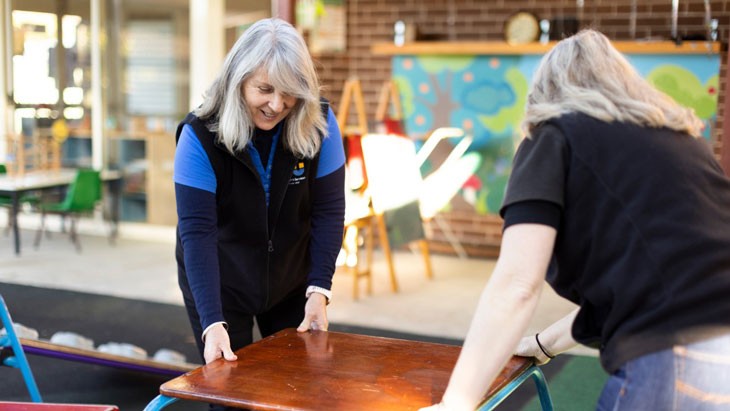
Proactively planning for and effectively managing potential harm and hazards is essential to providing safe environments for children to learn, develop and thrive.
The National Quality Framework (NFQ) sets out obligations relating to children’s health, safety and protection from harm and hazards. Requirements that approved providers, nominated supervisors and educators must observe include, but are not limited to:
- National Law:
- Section 167 Offence relating to protection of children from harm and hazard
- Section 165 Offence to inadequately supervise children
- Section 3 Objectives and guiding principles
- Section 3A Paramount consideration
- National Regulations:
- Regulation 103 Premises, furniture and equipment to be safe, clean and in good repair
- Regulation 115 Premises designed to facilitate supervision
- Regulation 168(2)(h) Providing a child safe environment
- National Quality Standard:
- Quality Area 2 Children’s health and safety.
Reflecting on your practice
Being aware of your legal obligations, responsibilities and best practice risk management strategies ensures services are well-equipped to identify, assess and manage risks of harm or hazards that may arise. This includes ensuring the rights and best interests of children are at the centre of every decision and action you take, as required under the National Law as it applies in NSW. In practice, this means placing children first at all times when assessing risks, designing environments and responding to hazards.
Engaging in ongoing reflection is also essential to this process, as it supports quality improvement and embeds children’s safety and wellbeing within service practice, routines and culture.
Use the following prompts to evaluate your service’s operations and identify additional precautions you can implement to improve compliance with legislative requirements and support the health, safety and wellbeing of everyone within your service.
Ask yourself: Do your policies and procedures reflect current legislative requirements?
Under the National Regulations, approved providers must ensure a policy and procedures for providing a child-safe environment is in place at their service (regulation 168).
Amendments to regulation 168(2)(h) came into effect on 24 April 2026 and make it mandatory for services to address key elements of how they will provide a child safe environment in their policies and procedures. This includes:
- a commitment to ensuring a particular child’s safety, welfare and wellbeing are paramount in all decisions and actions
- ensuring all staff complete child protection training as required by the Education and Care Services National Law, including maintaining up to date records of training
- maintaining a register of child protection concerns
- ensuring staff know how to report any concerns and having the NSW Early Learning Commission’s Reporting Guide in a place accessible by all staff
- conducting child protection risk assessments
- maintaining accurate daily attendance records, ensuring children are accounted for at all times.
For more information on this requirement read Compliance focus – child safe environments.
In addition to updating their child safe environments policies and procedures providers are encouraged to review other existing policies and procedures to ensure these important documents reflect the safety, wellbeing and best interests of the child as their paramount consideration. For more on the paramountcy principle read Compliance focus – paramountcy in practice.
Refer to the Guide to the NQF and Guide to the NQF Addendum - NSW legislative requirements to understand NSW-specific provisions that underpin your quality and compliance obligations.
Are your risk assessments due to be reviewed?
Risk management is an ongoing process that must be implemented in any environment where children are present. Regardless of where the service is operating, either on site or on an excursion, educators must carry out risk assessments to ensure everyone’s safety. The National Regulations set out specific requirements for risk assessments relating to particular activities and environments, including when they need to be completed and the frequency that they should be reviewed.
Embedding a risk management cycle into your service practice, including regular assessments relevant to your service, will help minimise potential risks by ensuring all staff are continuously monitoring and adapting to changing circumstances.
The risk assessment and management cycle involves:
- identifying potential hazards
- assessing the obvious and underlying risks associated with identified hazards
- mitigating and controlling the risks
- evaluating, monitoring and reviewing all risk controls
- documenting the process.
Tools and resources to support risk management practices at your service are available on the ACECQA website.
Are all staff aware of protocols when upkeep and maintenance is required?
Ensuring your premises and all furniture and equipment are safe, clean and well maintained is critical to providing a child-safe environment (regulation 103). Your policies and procedures should clearly outline what safety and maintenance checks should be conducted and when. They should also detail staff members’ roles and responsibilities for carrying out maintenance activities and the actions they must take when potential hazards or maintenance tasks are identified.
Consider adding these action items to your maintenance and safety checklists. Rotate the task of conducting these checks among staff members, each of whom will provide fresh eyes and a fresh perspective.
- Use safety guards to protect children from sharp corners or edges of furniture and equipment.
- Consider avoiding the use of ‘loop top’ or ‘rod top’ styles of fencing that children can climb or get caught in. Further information on the fencing recommendations (PDF 1.2 MB) can be found at Kidsafe NSW.
- Be careful of large containers with lids that could crush, trap a child or cause injuries.
- Put safe locking devices on drawers, windows, doors and gates.
- Store knives, medicines and chemicals securely and out of children’s reach. Safely dispose of these and other goods that pose a risk of harm and hazard to children when they are expired or no longer needed.
- Check all electronics. Ensure power points in reach of children contain safety covers and are checked for damaged wiring or wall sockets.
- After tradespeople have been at your service, make sure you complete a safety check to identify any hazards they may have left behind.
- When arranging and using equipment, follow safety advice from recognised authorities and manufacturers. Keep documents handy to confirm it meets Australian standards.
- All resources and equipment must be non-toxic and non-flammable. Regularly check and remove any resources or equipment that are damaged or in disrepair.
- Make sure the placement of furniture and equipment doesn’t create harm or hazard.
- Check equipment and resources are age-appropriate for children in your service.
Regulation 103 in practice
The educator checks the environment each morning before the children arrive using an indoor and outdoor safety checklist. The checklist considers whether the environment, premises and equipment is clean, safe and in good repair and the educator removes items of potential risk such as broken resources or a rake left out prior to children using the space.
This is an example of good regulatory practice that complies with regulation 103.
A timber cubbyhouse has peeling paint, a broken door hanging by one hinge and multiple nails protruding where they’ve come loose. An educator sets up some cushions and books inside the cubbyhouse and places a cushion against the door to stop it from swinging, although they take no action to remove the protruding nails.
This is an example that does not comply with regulation 103 and creates a risk to the child.
A service is hit by a large storm which damages a section of their fencing rendering it unsafe and beyond repair. The service undertakes a risk assessment of the physical environment, considering both immediate safety risks and longer-term opportunities to enhance child safety.
Rather than replacing the damaged fencing like-for-like, the service takes this opportunity to replace their current loop top fencing with flat top rail fencing that aligns with advice from KidSafe NSW.
This decision demonstrates regulatory practice that complies with regulation 103.
What processes are in place to monitor change in the outdoor environment?
Changes within the environment can create risks you may be unaware of and may require educators to adjust their practice and the environment to protect children from risk of harm.
It’s important for educators to be mindful of and monitor changes that may occur, such as:
- new equipment or a new set-up location
- surface run-off that can build up over time and reduce fencing height
- installation of a raised garden bed or other structures which, when positioned next to a fence, can create a climbing risk.
Daily environment safety checks will identify any issues and help you prevent injuries and accidents.
Refer to Quality Area 3: Physical environment of the Guide to the NQF for reflective questions to consider and support practice at your service.
How can educators be more responsive to the needs of children?
Active supervision is key to keeping children safe. It requires educators to move through indoor and outdoor spaces to ensure children are effectively supervised at all times, while being alert to potential risks and hazards in the physical environment. Active supervision supports educators to predict and mitigate risks of harm, be attuned to the needs of children and make changes to the environment as necessary.
Download the Active supervision: Ensuring safety and promoting learning information sheet on ACECQA’s NQF changes overview page.
Managing the risk of harm and hazards should be embedded in your everyday practice. By prioritising the wellbeing of children through education, active supervision and ensuring physical environments are clean and properly maintained, educators ensure that children can learn and grow in a secure and nurturing environment.
Resources
- Complete Governance and Risk Management Program, a free training program for approved providers and service leaders delivered by Early Childhood Australia available until 30 June 2026.
- Watch the September 2025 ECE Connect session, Keeping children safe: identifying and responding to risks.
- Watch the Risk management in children’s services series of webinars delivered by Community Early Learning Australia on behalf of the department.
- Revisit our articles Tips to meet Standard 2.2: protecting children through effective supervision and emergency management and Compliance focus – Critical reflection and supervision.
- Download the ACECQA policy guidelines for providing a child safe environment information sheet (PDF 217 KB).
- News
News
-
Compliance focus – child safe environments
-
Embedding child safety into staff onboarding and induction
-
Greystanes Hilltop Childcare Centre suspended immediately due to ongoing non-compliance
-
Narrabeen North outside school hours care service suspended
-
Developing and maintaining a strong reporting culture