
Units, Stage 3 – Science and Technology
Stage 3 sample units to support implementation of the Science and Technology K–6 Syllabus (2024).
Syllabus
Syllabus outcomes and content descriptors from Science and Technology K−6 Syllabus (2024) © NSW Education Standards Authority (NESA) for and on behalf of the Crown in right of the State of New South Wales, 2024.
Science and Technology K–6 sample units align with the department’s scope and sequence. The structure follows NESA’s sample whole school curriculum plan and is organised on an 8-term-per-stage basis. Eight sample units for Stage 3 will be released in a phased approach across 2025 and 2026.
This unit teaches students to explore technologies used for collecting weather data. They distinguish between climate and weather and research the effects of natural events and human activities on the atmosphere and climate.
Unit 1 – Science and Technology, Stage 3 (staff only) (DOCX 29.6 MB)
This unit teaches students to examine the functions of the main organs in the digestive, respiratory, and circulatory systems and to test how circulation and respiration respond to physical activity. They investigate structural and behavioural adaptations in humans and research Australian inventions that address health or lifestyle needs. In this unit, students also explore different ways to represent data and evaluate digital systems.
Unit 2 – Science and Technology, Stage 3 (staff only) (DOCX 13.2 MB)
This unit teaches students to investigate electrical circuits and how electrical energy can be transferred and transformed. They pose questions and test materials as conductors or insulators. Students design and build a quiz game on electrical safety, based on data gathered around user needs. These game prototypes are evaluated and modified against generated design criteria including criteria that supports the sustainable use of materials. Students connect components in a digital system to create and code a conductivity tester.
Unit 3 – Science and Technology, Stage 3 (staff only) (DOCX 27.4 MB)
This unit teaches students that plant and animal adaptations support survival, interpret food webs to understand energy flow, examine evidence of environmental change over time, and consider the impacts of species loss and introduction. Students also investigate how Aboriginal and Torres Strait Islander Peoples’ sustainable practices protect ecosystems.
Unit 5 – Science and Technology, Stage 3 (staff only) (DOCX 34.3 MB)
This unit teaches students to investigate how recyclable, reusable, renewable, biodegradable and compostable materials enhance sustainability and reduce environmental impact. They identify variables and conduct fair tests to explore how substances dissolve in water and investigate collection and processing of waste. Students apply their findings by generating and communicating sustainable solutions that address identified environmental concerns.
This unit teaches students about astronomical features beyond our solar system. They research how living organisms can travel and survive in space and examine space technologies that have benefited humankind. Students also explore how Aboriginal and Torres Strait Islander Peoples use knowledge of the Sun, Moon and stars for navigation and wayfinding.
Unit 7 – Science and Technology, Stage 3 (staff only) (DOCX 3.6 MB)
Feedback
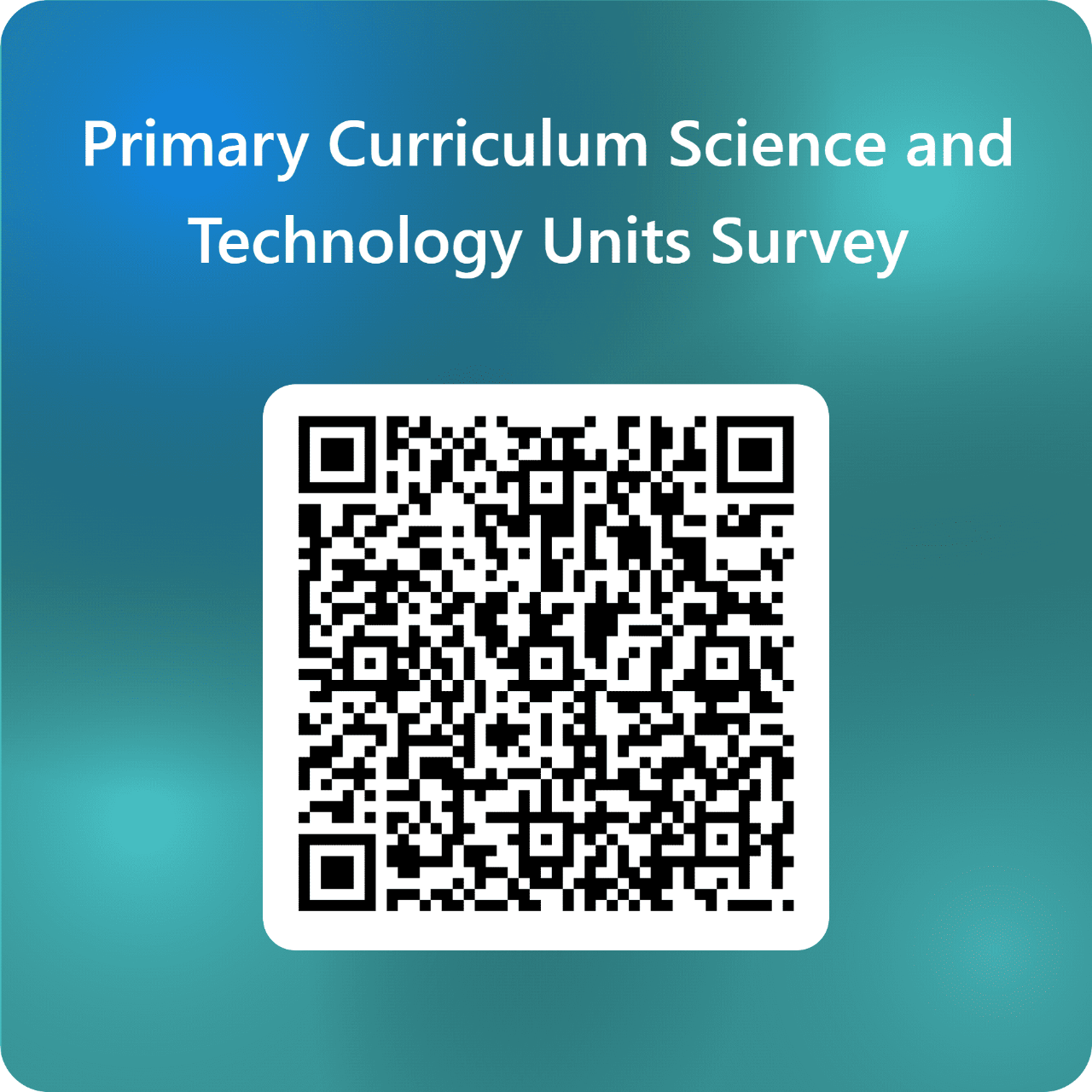
We value your insights to inform the ongoing refinement of these units. After teaching, we invite you to provide feedback on the unit's effectiveness, what worked well and what could be improved.
To access the survey, scan the QR code or go to Science and Technology K–6 units survey.
Last modified date
04/06/2026
Business unit contact email
Executive director
Megan Kelly
Executive director’s business unit
Teaching Learning&Student Wellbeing