
Units, Stage 1 – Science and Technology
Stage 1 sample units to support implementation of the Science and Technology K–6 Syllabus (2024).
Syllabus
Syllabus outcomes and content descriptors from Science and Technology K−6 Syllabus (2024) © NSW Education Standards Authority (NESA) for and on behalf of the Crown in right of the State of New South Wales, 2024.
Science and Technology K–6 sample units align with the department’s scope and sequence. The structure follows NESA’s sample whole school curriculum plan and is organised on an 8-term-per-stage basis. Eight sample units for Stage 1 will be released in a phased approach across 2025 and 2026.
This unit teaches students to make observations about plant growth, the life cycles of living things and extinct animals. Students collect and group data from a local habitat. They create sequential algorithms to control digital devices.
Unit 1 – Science and Technology, Stage 1 (staff only) (DOCX 17.6 MB)
This unit teaches students how to use the design process to break projects into manageable steps. Students apply the design process steps to create or improve a kitchen product that meets user needs. Students investigate materials, food, and fibres used in the kitchen and determine the best use for each material in a product. They also learn how innovative products and systems such as digital kitchen appliances influence the use of food and fibre.
Unit 2 – Science and Technology, Stage 1 (staff only) (DOCX 14.2 MB)
This unit teaches students how Earth’s systems and seasonal changes affect weather, environments, and living things. They learn how Aboriginal and/or Torres Strait Islander Peoples use seasonal indicators in everyday life. Students identify rocks in natural formations and human-built structures.
Unit 3 – Science and Technology, Stage 1 (staff only) (DOCX 23.9 MB)
This unit teaches students to explore how sound is produced and transmitted through various materials. Students will apply selected steps of a design process to create items that demonstrate how material properties affect sound production and transmission.
Unit 5 – Science and Technology, Stage 1 (staff only) (DOCX 9.9 MB)
This unit teaches students to examine how light travels through air, water, and some solids, recognising how these materials can affect its path. They pose questions and conduct experiments to explore how light is reflected, refracted, dispersed, or absorbed by various materials. They apply one or more steps of a design process to create a product that meets an identified user need.
Unit 6 – Science and Technology, Stage 1 (staff only) (DOCX 8.6 MB)
This unit teaches students to observe the daily and nightly features of the sky. Through practical activities they develop an understanding of celestial patterns, including how the Earth's rotation causes the cycle of day and night and the Moon's reflective nature. Students learn how the Sun, Moon and stars are represented in diverse cultures. Students learn about the living cultural practices and importance of Sky Country to Aboriginal and/or Torres Strait Islander Peoples.
Unit 7 – Science and Technology, Stage 1 (staff only) (DOCX 23.3 MB)
Feedback
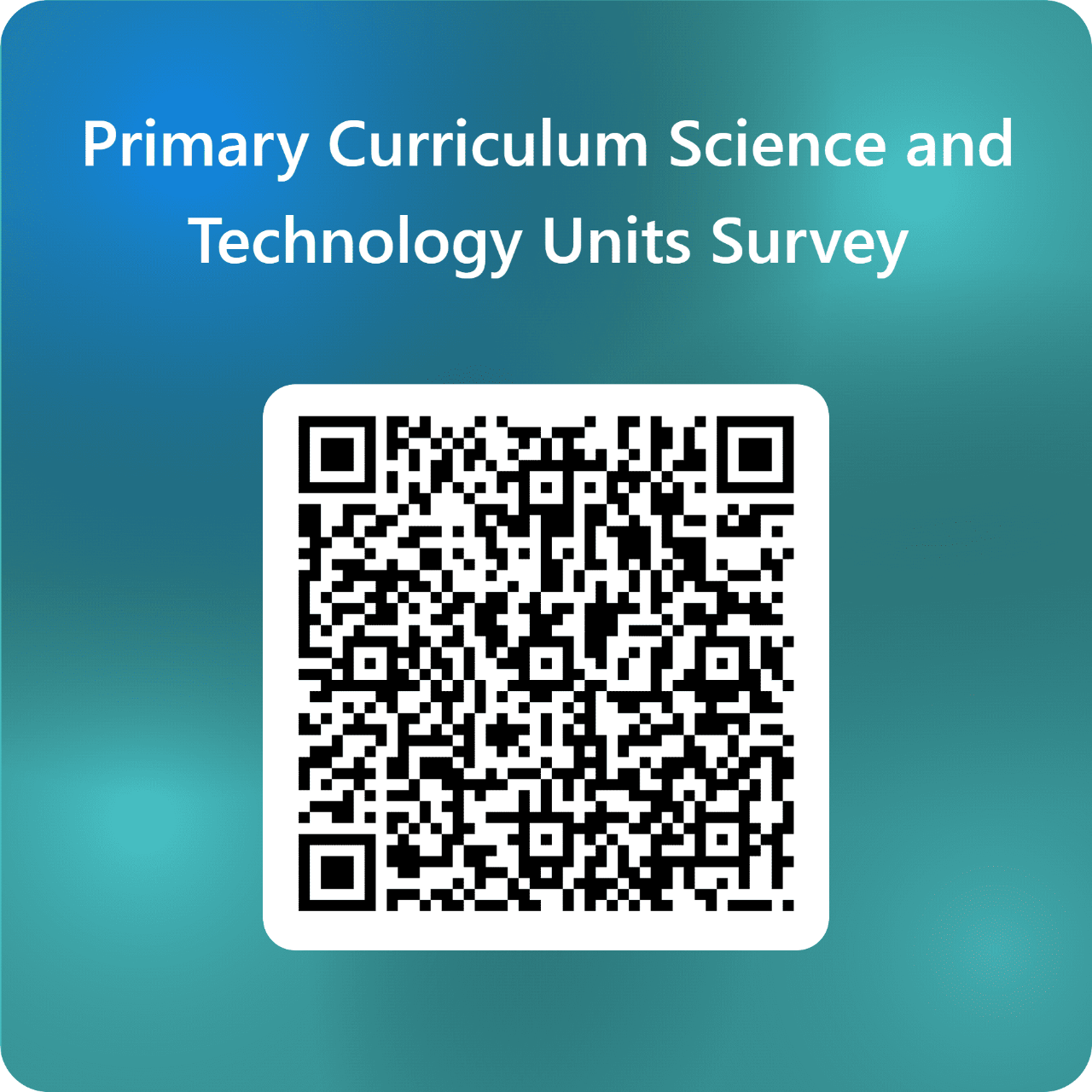
We value your insights to inform the ongoing refinement of these units. After teaching, we invite you to provide feedback on the unit's effectiveness, what worked well and what could be improved.
To access the survey, scan the QR code or go to Science and Technology K–6 units survey.
Last modified date
04/06/2026
Business unit contact email
Executive director
Megan Kelly
Executive director’s business unit
Teaching Learning&Student Wellbeing