
Compliance focus – restriction of personal digital devices in ECEC
Guidance on what devices are restricted, who the restrictions apply to and embedding the National Model Code into policy, procedure and practice.
29 September 2025
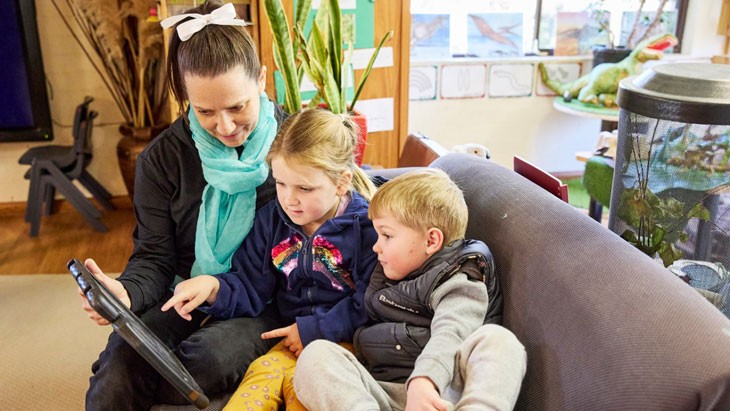
New requirements relating to the safe use of digital technologies and online environments in early childhood education and care (ECEC) came into effect 1 September 2025.
Approved providers, service leaders and educators are responsible for creating and maintaining a child safe culture when using digital technologies. Approved providers must ensure their child safe environment policy and procedures are reflective of the changes, and these are understood and implemented by all staff.
Overview of the new requirements
- Services must have a policy and procedures around the safe use of digital technology and online environments (PDF 241 KB) (regulation 168(2)(ha)). The policy and procedures must align with the National Model Code for Taking Images in Early Childhood Education and Care (National Model Code).
- In centre-based services, the policy must restrict the use of personal mobile phones and digital devices capable of taking images or videos while working directly with children.
- The principles of the National Model Code should inform family day care (FDC) policy and practice to support the safe and appropriate use of personal digital devices.
These changes follow expedited recommendations from the Review of Child Safety Arrangements under the National Quality Framework (PDF 2.3 MB) and nationally-agreed reforms to the sector announced by Education Ministers in late August 2025.
What is the National Model Code?
The National Model Code (PDF 95 KB) and Guidelines (PDF 165 KB) outline child safe practices for the safe use of digital devices in ECEC settings:
- Only service-issued devices should be used to take photos and/or videos of children.
- Personal digital devices that can take images or videos, personal storage and file transfer media should not be in the possession of any person while providing education and care and working directly with children.
- The use and/or possession of a personal digital device may be authorised for limited, essential purposes other than taking images or recording videos of children.
- Strict controls should be in place for storing and retaining children's images and recordings.
The model code promotes a child safe culture, strategies to support children’s dignity and rights, and increased awareness of the risks and considerations associated with using digital technologies in ECEC settings.
Devices included in the restrictions
Under the National Model Code, personal digital devices that can take images or videos and personal storage and file transfer media must be restricted. This includes:
- phones
- tablets and iPads
- digital cameras
- smart watches with camera or recording functionality
- wearables, such as camera glasses
- SD cards
- USB drives
- hard drives.
Who do the restrictions apply to?
Restrictions on personal digital devices apply to any person providing education and care and working directly with children.
This includes but is not limited to:
- service leaders, including approved providers, nominated supervisors, area managers, FDC coordinators, and persons in management and control
- teachers and educators (including casual and agency staff)
- placement students
- tertiary provider representatives assessing placement students at a service
- volunteers
- paid or unpaid third parties delivering programs or activities to children in a service
- allied health professionals attending a service.
The restriction does not apply to people who do not work directly with children and are not providing education and care, for example:
- parents and carers dropping off or picking up their child from a service
- police
- officers from regulatory services (including NSW ECEC Regulatory Authority, NSW Office of the Children’s Guardian compliance officers and NSW Food Authority authorised officers)
- third parties attending the service but not working with children or providing education and care (e.g. maintenance contractors).
While this restriction does not apply to these groups, services must remain vigilant and implement policies and procedures to prevent any unauthorised photography or videography.
Authorised officers using department-issued devices
When attending ECEC services, it is standard practice for authorised officers from the NSW Early Childhood Education and Care Regulatory Authority to bring a department-issued device to ensure they have the necessary tools for documentation of evidence and reporting.
Complying with the new requirements
Regulation 168(2)(ha) requires services to have a policy and procedures in place for the safe use of digital technologies and online environments.
The policy and procedures must align with the National Model Code and address:
- restrictions on personal digital devices, including who and what devices the restrictions apply to
- the taking, use storage and destruction of images and videos of children
- obtaining authorisation from parents to take, use and store images and videos of children
- the use of any optical surveillance device (e.g. CCTV)
- the use of any digital device issued by the service
- the use of digital devices by children.
ACECQA has developed resources to help approved providers and their services create, update and implement child safe policies, procedures and practices, including:
- NQF Child Safety Guides
- NQF Child Safe Culture Guide self-assessment and risk assessment (PDF 3.1 MB)
- NQF Online Safety Guide self-assessment and risk assessment (PDF 900 KB)
Services can also use the eSafety Commissioner’s eSafety checklist for early learning services to assess the risks associated with online engagement for children, families and educators. OOSH services may wish to adapt the checklist or resources in the eSafety school’s hub to use in their service context.
Register for eSafety’s Early Years online safety information session, which will be held on 23 October 2025 from 12:30 to 1:30 pm. The free webinar will focus the safe use of digital technologies and online spaces for children, educators and families.
Third-party professionals and students
When attending a service and working directly with children, third-party professionals (such as an allied health professional) or students can use a device that is:
- issued by their business or institution
- used only for work purposes (not personal use).
Exemptions to personal digital device restrictions
The National Model Code recognises that exceptions may be required in limited circumstances.
An approved provider may allow a member of staff to use and/or carry a personal digital device for ‘essential purposes’, while they are working directly with children. The device must not be used to take images or videos of children or impede the active supervision of children.
Outlined in Part 3 of the National Model Code, ‘essential purposes’ include:
- communication in emergencies (e.g. situations involving a lost child, serious incidents, injury to a child or staff member, lockdown or evacuation, a natural disaster event)
- personal health requirements (e.g. heart or blood sugar monitoring)
- disability (e.g. where a personal digital device is an essential means of communication for an educator or other staff member)
- family necessity (e.g. staff member with an ill or dying family member)
- technology failure (e.g. where service-issued devices are temporarily unavailable).
Any exceptions to the restrictions on personal digital devices for essential purposes must be authorised in writing by the approved provider of a service. The approved provider may provide retrospective approval if written authorisation was not reasonably practical.
Supporting staff to understanding and implement policies and procedures
- Explain the ‘why’ behind the policy, such as child safety, children’s dignity and rights, legal compliance.
- Clarify who the restrictions apply to, with examples for educators, allied health professionals, students and volunteers.
- Outline acceptable and unacceptable device use, including what constitutes a ‘service-issued’ device and how exceptions are managed.
- Display signage at entry points and staff rooms reminding staff and visitors of device restrictions.
- Provide quick-reference cards for staff summarising key points of the image and device use policy.
- Include clear instructions in staff areas about how to store or secure personal devices during shifts.
- Include this topic in daily briefings, staff meetings and induction checklists for new, casual, and relief staff.
- Conduct regular digital risk assessments. Review how technology is used in the environment and identify areas where risks to children’s safety, privacy or wellbeing may arise.
- Set a clear personal device policy. Outline when and where personal devices within the educator’s residence can be used.
- Create an environment where staff feel comfortable asking questions or seeking clarification about the policy.
- Support staff to understand the importance of compliance, not as surveillance but as a measure to uphold children's safety, privacy and dignity.
- Have conversations with staff about processes for raising concerns or reporting breaches of the requirements. Reassure them that follow-up will be supportive, not punitive.
Reflecting on practice
- How does your service’s safe use of digital technologies and online environments policy and procedures address the restriction of personal digital devices?
- How will your service ensure families are aware of the new policy and procedures, including how images and videos of their children will be stored and managed?
- How will you support staff to understand and confidently implement the policy, procedures and new regulatory requirements?
- How will you ensure that third-party professionals understand and comply with your service’s policy and procedures around personal digital devices?
- How does your service balance the educational use of digital technologies with the need to minimise risks to children's safety, privacy and dignity?
- What processes are in place to review and monitor ongoing compliance with the restrictions on personal digital devices?
- How will your service verify and monitor that third-party professionals are only using business-issued devices while engaging with children?
- How will you ensure agency and casual staff working at your service are aware of, understand and consistently implement service policies and procedures?
Resources
- NQF Online Safety Guide
- Safe Use of Digital Technologies and online environments (ACECQA 241 KB)
- Implementing the Child Safe Standards resources developed by the OCG for the NSW ECEC sector, including:
- Child Safe Early Childhood Education and Care e-learning – Module 2: Risk management in a child safe service and Module 6: Child safe leadership and policy creation
- Policy and Practice in Focus: An ECEC Child Safe Podcast Miniseries – Episode 2: Voice and Choice in the NQF and Episode 4: Child safe risks in ECEC Contexts.
- New child safe requirements compliance article
- Guidance for Training Providers and Early Childhood Education and Care (ECEC) Services around appropriate use of images and videos of children (PDF 216 KB)
For more information
If you have any questions about your service operation, you can contact the Information and Enquiries team on 1800 619 113 or email ececd@det.nsw.edu.au.
- News