
Representative student voice and agency
Formal, structured representative opportunities are important avenues for student participation, empowering young people to develop leadership skills and have a meaningful input in their school community on behalf of their peers.
There are many different models through which students can engage, from school councils and parliaments to other innovative approaches at school, network and directorate level. Our peak student representative body is the Minister's Student Council (DOVES). which ensures student voices have influence in system-wide decisions.
To ensure student representation truly reflects the whole school community, schools should actively create opportunities for all students, including those who may not usually take part. Including students from a range of backgrounds and experiences, and amplifying voices that are often less heard, ensures that all perspectives are heard and have real influence in decision-making. This approach fosters equity and inclusivity, helping to shape schools where every student's voice matters and contributes to positive change.
Student Representative Councils
A Student Representative Council (SRC) is a group of students elected by their fellow students to represent all students in the school. SRCs work democratically to represent the student body in school decision-making and organise ways for students to participate in school life.
The SRC is an important component of civics education and engagement in schools. The Democratising the SRC: How-to guide will show you how to organise your school’s SRC following democratic principles and help your students relate their SRC experience to the structure and principles of Australia’s democracy.
A short video for students explaining the SRC model and its connection to Australia’s democracy is below.
Video - Welcome to the SRC (duration 5:38)
School Parliaments
School parliaments are another way to provide an opportunity for students to participate actively in decision-making.
School parliaments are based on the Australian system of government and include students democratically elected to positions such as Prime Minister, portfolio ministers, Whip and Speaker, parliamentary secretaries, Members of the Opposition. School parliaments follow procedures similar to those of the Australian Parliament such as moving and debating motions, holding question time and making speeches.
The Constitution Education Fund has produced a guide called Implementation of a school parliament suitable for primary and secondary schools with the goal of increasing student understanding of the Australian system of government and constitution.
More resources can be found at the Parliamentary Education Office in Canberra with a series of films and fact sheets on the roles and functions of Parliament. Watch a video called Role-play the Parliament, House of Representatives.
Network-level ambassador programs
Ambassador programs offer valuable opportunities for students to develop leadership beyond school level. These programs empower students to have a broader influence, allowing them to contribute to shaping educational practices, policies, and initiatives at network level.
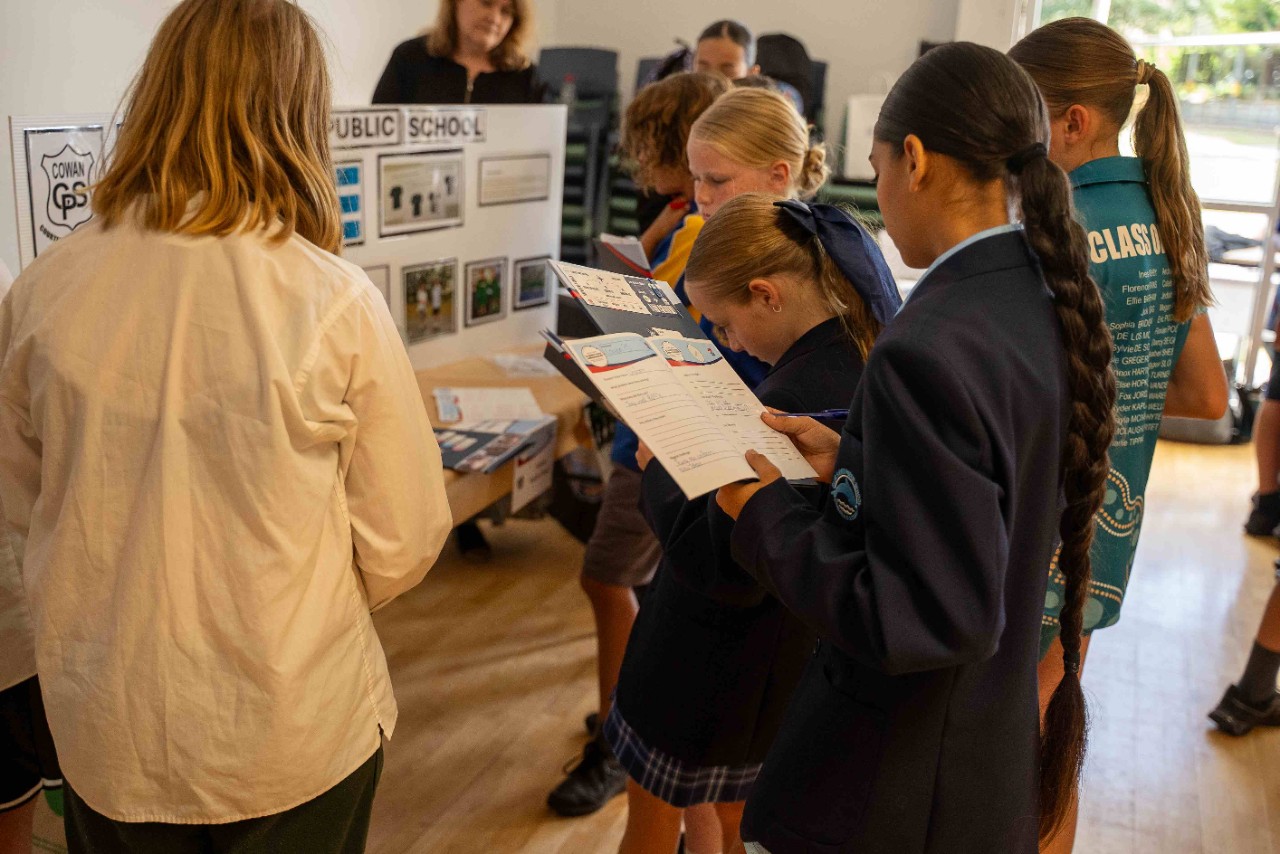
An excellent example is the Central Coast Student Voice Ambassadors, who work closely with teachers and school leaders to embed student perspectives into learning, teaching, and policy development. Using a 5-phase collaborative inquiry model—building shared understanding, assessing data, planning, implementing, and reviewing—they align their efforts with the School Excellence Framework and evidence-based practices. This structured approach ensures genuine student participation while supporting continuous school improvement through clear, data-driven milestones.
Other student-led teams
Students can also exercise voice and agency on committees or teams based on needs and interests. These could focus on social justice, the environment, learning and wellbeing, sport, music and community projects.
Students may also lead co-curricular activities such as chess clubs, dance groups or coding clubs. Students are not usually elected but rather join these groups.
Student leadership resources
The activities below have been developed with students, for students, and can be adapted to suit individual school contexts. Each activity takes approximately 30 minutes and can be facilitated by student leaders. They can be done in any sequence.
Printable resources
- A team approach (PDF 200 KB)
- Making decisions (PDF 158 KB)
- Values and visions (PDF 178 KB)
- Exploring team strengths (PDF 201 KB)
- Design thinking (PDF 181 KB)
- Inspirations (PDF 134 KB)
- Project planning (PDF 167 KB)
- Running successful meetings (PDF 196 KB)
- Communicating with school staff and students (PDF 186 KB)
- Developing an elevator pitch (PDF 151 KB)
- Reflecting and evaluating (PDF 186 KB)
- Editable word document of all student resources (DOCX 151 KB)
Last modified date
14/10/2026
Business unit contact email
Executive director
-
Executive director’s business unit
Communication & Engagement