
Interpreting texts in road safety
As part of their English and PDHPE units of work, Stage One students explored the important topic of passenger safety. This unit aimed to help students become aware of how to keep themselves and others safe when travelling in vehicles.
Reading and viewing road safety messages
Students read a variety of texts such as picture books, stories, and information sheets that highlighted safe practices as passengers. These included messages about wearing seatbelts, sitting quietly, using booster seats, and making safe choices in cars and buses.
They also viewed print advertisements and television commercials designed to promote passenger safety. These ads used simple language and visuals to encourage safe behaviours, such as buckling up and following rules when getting on and off buses.
Class discussion and reflection
After reading and viewing the materials, students worked together as a class to talk about the main road safety messages each text or advertisement presented. Teachers guided students to identify what actions passengers should take to stay safe and why those actions are important. Discussions included real-life scenarios such as getting into a car, travelling on a bus, and the importance of listening to adults in vehicles.
Written responses
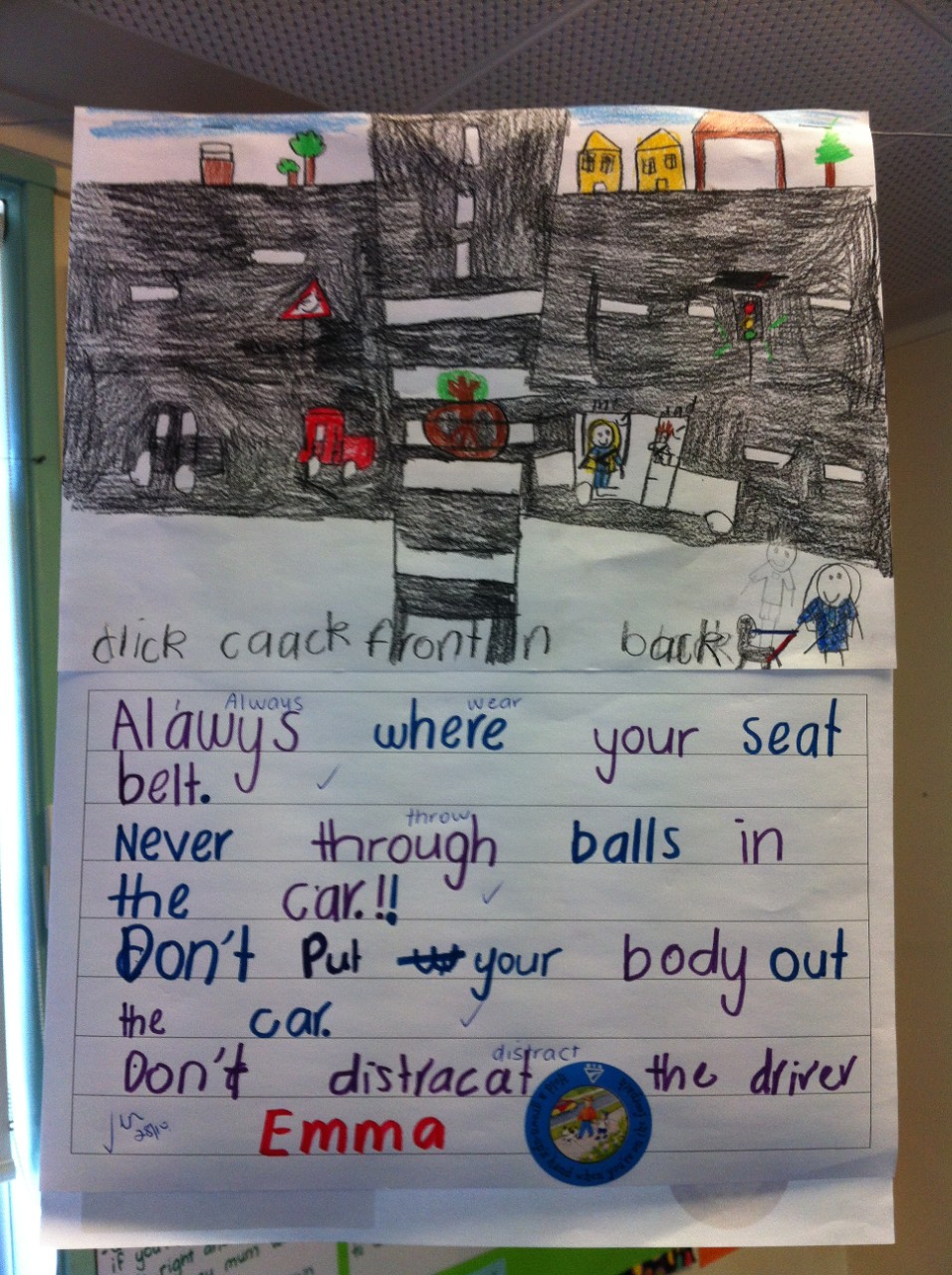
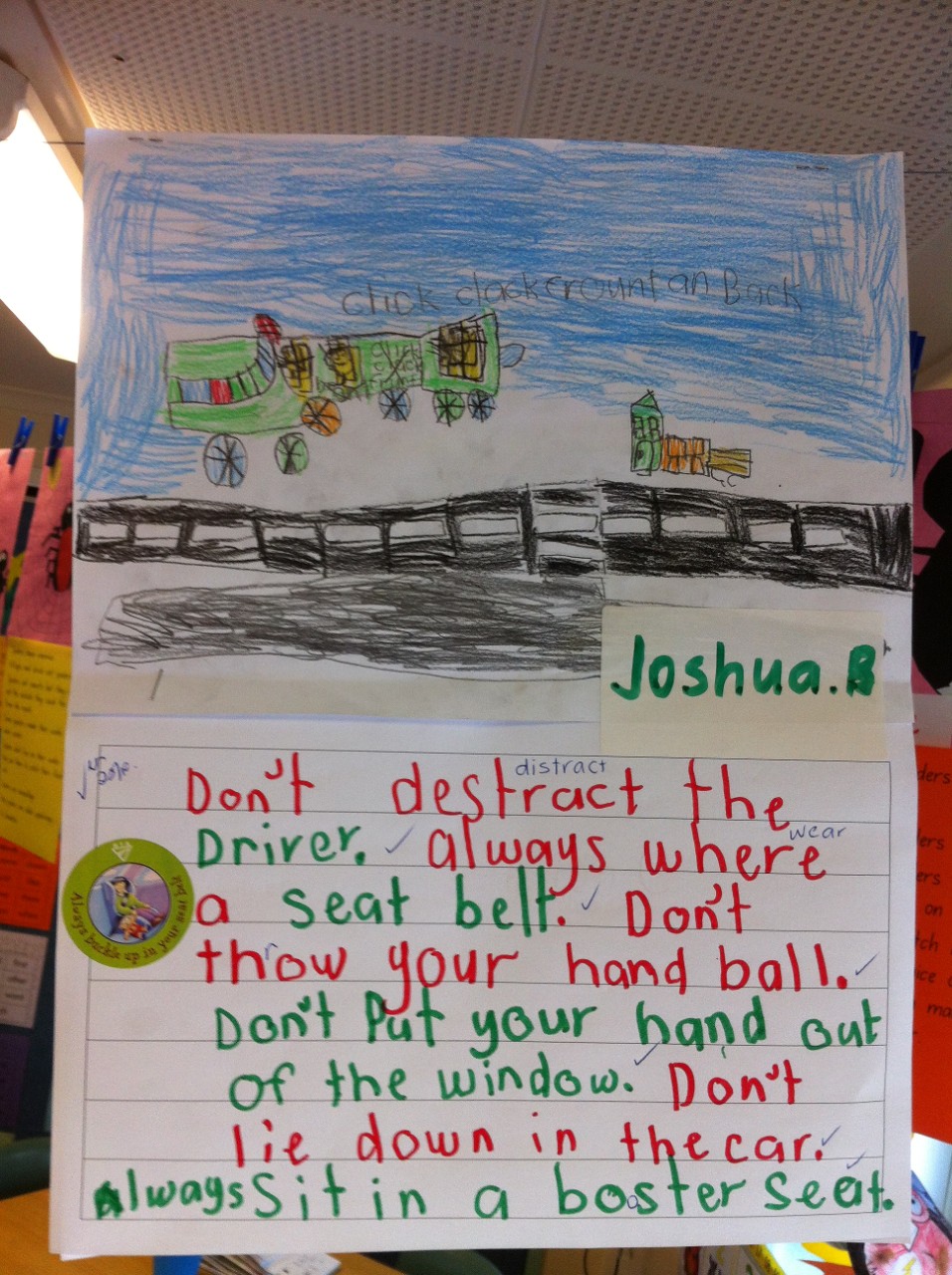
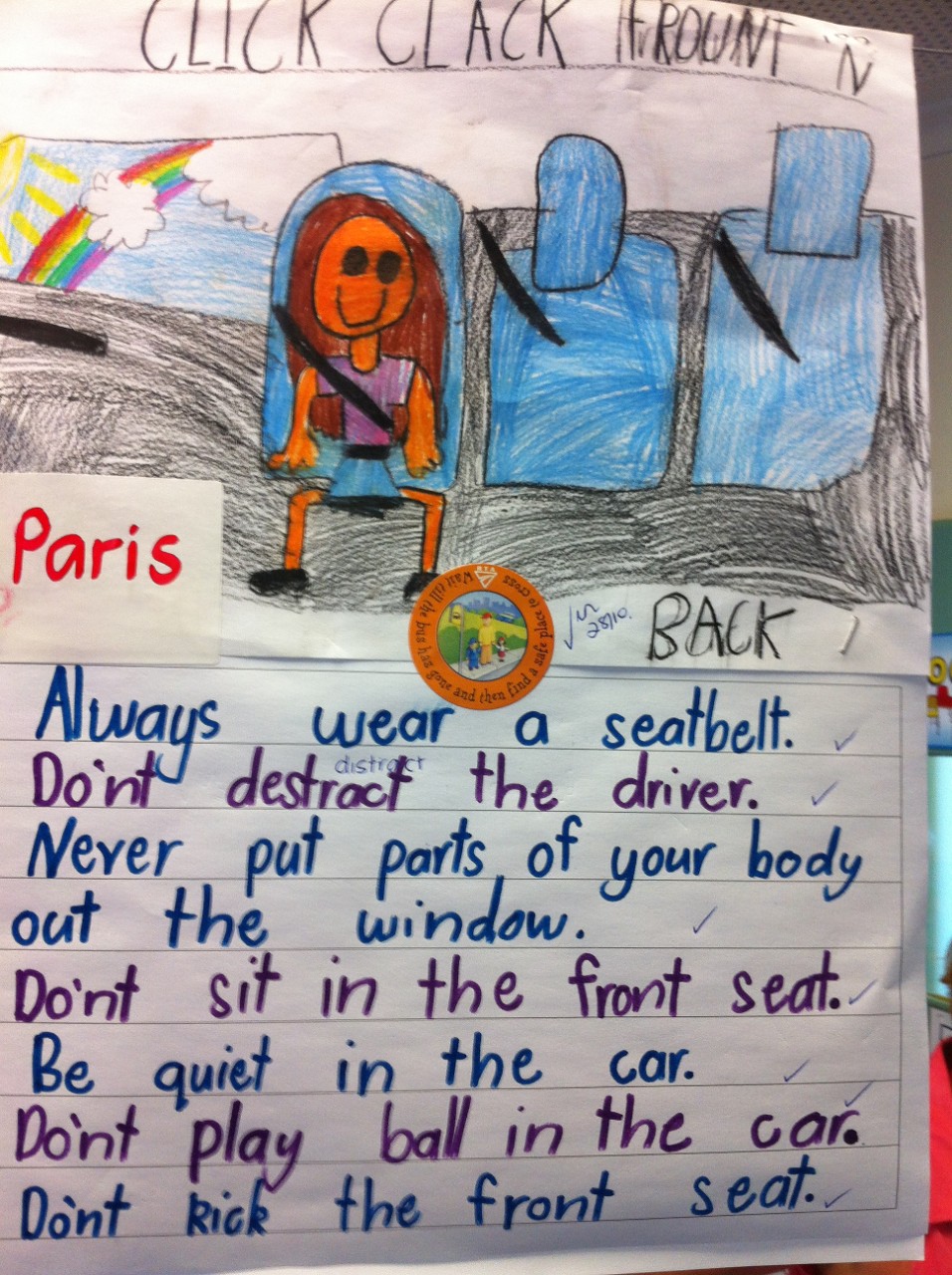
To demonstrate their understanding, each student was asked to write about the key safety messages they learned. These written responses helped students reflect on their learning and showed how well they could explain safe passenger behaviours in their own words.
This engaging activity encouraged students to think critically about road safety and empowered them to share what they had learnt with their families and peers, helping to keep safe when travelling as a passenger.
For more ideas about teaching road safety education through literacy contact your local Road Safety Education Officer.
Last modified date
13/04/2026
Business unit contact email
Executive director
Megan Kelly
Executive director’s business unit
Teaching Learning&Student Wellbeing